
Your water heater is acting up. Maybe it’s making noise. Maybe the hot water isn’t lasting as long as it used to. Maybe you just got a repair quote and you’re sitting there wondering: is it worth fixing, or is it time to cut my losses and replace the whole thing?
It’s one of the most common questions the licensed master plumbers at Restoration Plumbing in Dayton, Ohio field from homeowners — and it’s a genuinely good one. The answer isn’t always obvious, and getting it wrong in either direction costs you money. Pay for a repair on a unit that should have been replaced, and you’re back in the same conversation in 18 months. Replace a unit that had years of life left, and you spent money you didn’t need to.
Here’s the framework we use — the same one we walk homeowners through when they call us.
Start Here: How Old Is the Unit?
Age is the foundation of the repair-or-replace decision. Before anything else, find the manufacture date encoded in your serial number. (If you’re not sure how, our previous post in this series walks through how to decode the most common brands.)
| Unit Age | General Guidance | Why |
| Under 6 years | Repair is usually right | Unit has significant life remaining. Most single-component failures are cost-effective to fix. |
| 6–9 years | Depends on repair cost and condition | Apply the 50% rule (see below). Minor repairs make sense; major ones need more scrutiny. |
| 10+ years | Replace in most cases | Unit is near or past expected service life. Repair costs are likely to recur. Replacement gives you a fresh warranty and modern efficiency. |
Note: Tankless water heaters have a longer expected service life of 15–20 years. The same general logic applies, scaled to those benchmarks.
The 50% Rule: A Simple Test for the Gray Zone
For units in that middle range — roughly 6 to 9 years old — a useful rule of thumb is this: if the cost of the repair exceeds 50% of the cost of a new unit, replace it.
The math is straightforward. If a new comparable water heater installed runs $900–1,200 and the repair quote you’re holding is $600, you’re spending more than half the replacement cost on a unit that’s already in its second half of expected life. The next repair — and there usually is one — becomes a conversation all over again.
Contrast that with a $150 thermostat replacement on a 7-year-old unit in otherwise solid condition. That’s a clear repair situation. The rule isn’t meant to replace professional judgment — it’s meant to give you a starting framework before you have that conversation.
What Type of Failure Are You Dealing With?
Not all failures are equal. The nature of the problem matters as much as the cost of fixing it.
Failures That Generally Favor Repair
- Faulty thermostat — controls water temperature; replacement is straightforward and relatively low cost
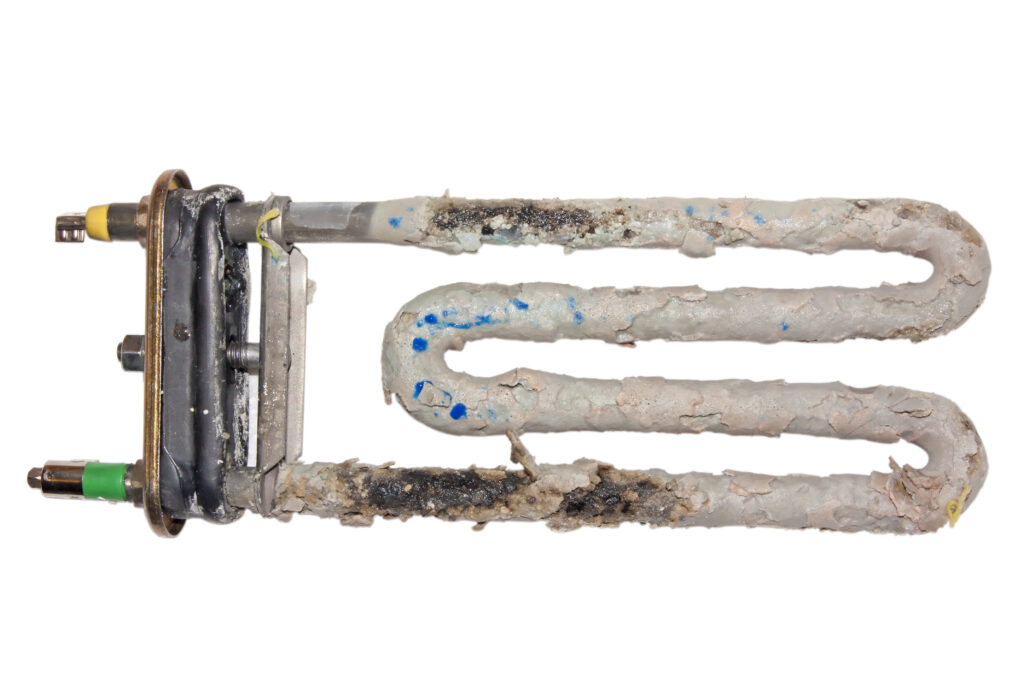
- Burned-out heating element (electric) — a common wear item, especially if sediment has been an issue; cost-effective on younger units
- Faulty pressure relief (T&P) valve — a safety component that can fail independently of the tank; inexpensive to replace
- Pilot light or igniter issues (gas) — often a minor fix if the gas valve and burner assembly are intact
Failures That Generally Favor Replacement
- Tank corrosion or internal rust — once the tank itself is compromised, no repair addresses the root problem; failure and leaking are a matter of time
- Active leaking from the tank body — not from fittings or connections, but from the tank itself; this is an irreversible failure condition
- Multiple component failures on an aging unit — when a second or third repair is needed within 12–24 months, the unit is telling you something
- Significant sediment damage with overheating history — if chronic sediment buildup has caused repeated overheating cycles, internal damage may be more extensive than a flush can address
Don’t Forget to Ask the Upgrade Question
If replacement is on the table, the conversation shouldn’t be limited to “same unit, new box.” This is the moment to evaluate whether your household’s needs have changed and whether a tankless water heater makes sense for your situation.
Tankless units heat water on demand rather than maintaining a stored tank — which eliminates standby heat loss and typically reduces energy consumption by 20–30% for average households. They also last significantly longer than tank units and deliver hot water without the capacity ceiling of a storage tank.
The tradeoff is upfront cost. A tankless installation runs higher than a straight tank replacement, and some homes require gas line or electrical upgrades to support the unit. Whether that math works depends on your home’s setup, your household’s hot water usage, and how long you plan to stay in the house.
It’s a legitimate conversation — and one the licensed master plumbers at Restoration Plumbing are well-equipped to have with you. We install both tank and tankless systems and have no stake in steering you toward either. The right answer depends entirely on your situation.
One More Factor: What’s the Risk of Waiting?
Sometimes the repair-or-replace decision gets made by default — the homeowner delays, the unit fails completely, and now the decision is being made under pressure with no hot water and potentially water on the floor.
If you’re reading this because your unit is showing warning signs — not because it’s already failed — you’re in the better position. You have time to get a professional assessment, weigh your options, and make a decision on your own terms. That window is worth using.
A tank that fails and floods a utility room or finished basement creates two problems at once: the plumbing replacement and the water damage remediation. In those situations, Restoration Plumbing handles the first — and our sister company RAM Restoration, available 24 hours a day at 937-885-0088, handles the second. But the far better outcome is that neither event happens on an emergency basis.
Get a Straight Answer From a Licensed Master Plumber
Restoration Plumbing is the dedicated plumbing division of RAM Holdings, serving residential and commercial customers throughout the Dayton, Ohio area. When you call us with a water heater problem, we tell you what we see — repair cost, replacement cost, and our honest recommendation based on the condition of your unit. No pressure, no upsell.
Call us at 937-883-6633 or visit www.restorationplumbing.com to schedule a water heater assessment or repair.
Already dealing with water damage from a failed unit? RAM Restoration — our 24/7 emergency restoration division — is available at 937-885-0088.