You’ve noticed the white crust around your faucets. Your glassware comes out of the dishwasher looking filmy no matter how many times you run it. Your skin feels tight after a shower. Your shampoo barely lathers. You’ve wondered if something is off with your water — but you’ve never quite gotten around to finding out.
Here’s the short answer for Dayton-area homeowners: if you’re on municipal water in Montgomery County or the surrounding region, you almost certainly have hard water. Not slightly hard. Measurably, significantly hard — by any scale used to classify it.
This post explains why that’s true, what it means, and how to confirm it for your specific address — because knowing is the first step to doing something about it.
What Hard Water Actually Is
Water hardness refers to the concentration of dissolved minerals — primarily calcium and magnesium — in your water supply. These minerals are picked up as water moves through limestone and dolomite rock formations in the ground. They’re not a contaminant in the traditional sense; hard water is generally safe to drink. But the mineral load it carries causes real, measurable damage to your home over time.
Hardness is measured in milligrams per liter (mg/L) or grains per gallon (GPG). Here’s how those numbers translate into categories:
| Classification | mg/L (ppm) | What You’re Likely to Notice |
| Soft | 0–60 | Little to no noticeable impact |
| Moderately Hard | 61–120 | Mild spotting, slightly reduced soap lather |
| Hard | 121–180 | Visible scale buildup, spotty dishes, skin and hair effects |
| Very Hard | 180+ | Heavy scale, appliance damage, significant soap and detergent inefficiency |
Where does Dayton fall?
The City of Dayton draws its water supply primarily from the Great Miami River aquifer system, one of the most productive groundwater sources in Ohio. That aquifer runs through thick deposits of limestone and gravel laid down by glacial activity thousands of years ago. The result: Dayton’s water consistently measures in the 200–300 mg/L range — well into “very hard” territory. Surrounding communities on well water or smaller municipal systems often test even higher.
What Your Home Is Already Telling You
You may not have run a water test, but your home has been running one for you. Hard water leaves evidence everywhere. Here’s how to read it:
At Your Fixtures and Faucets
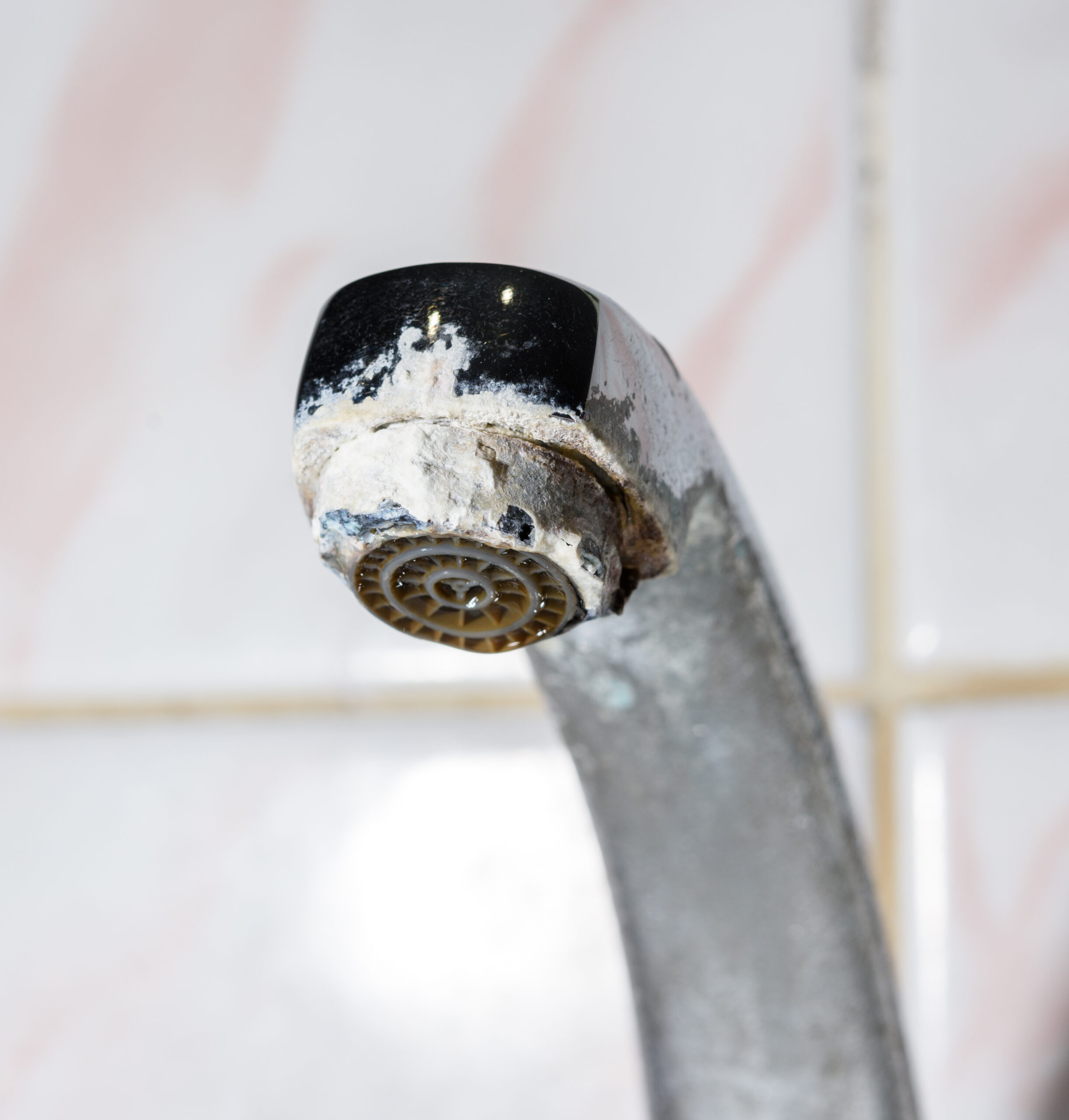
- White or yellowish crusty buildup around faucet bases, aerators, and showerheads. This is calcium carbonate scale — the same stuff that coats your water heater tank internally.
- Reduced water flow from showerheads and faucet aerators as mineral deposits narrow the openings over time.
- Staining in sinks and tubs that reappears quickly after cleaning, particularly around drain rings and waterline marks.
In Your Kitchen and Laundry
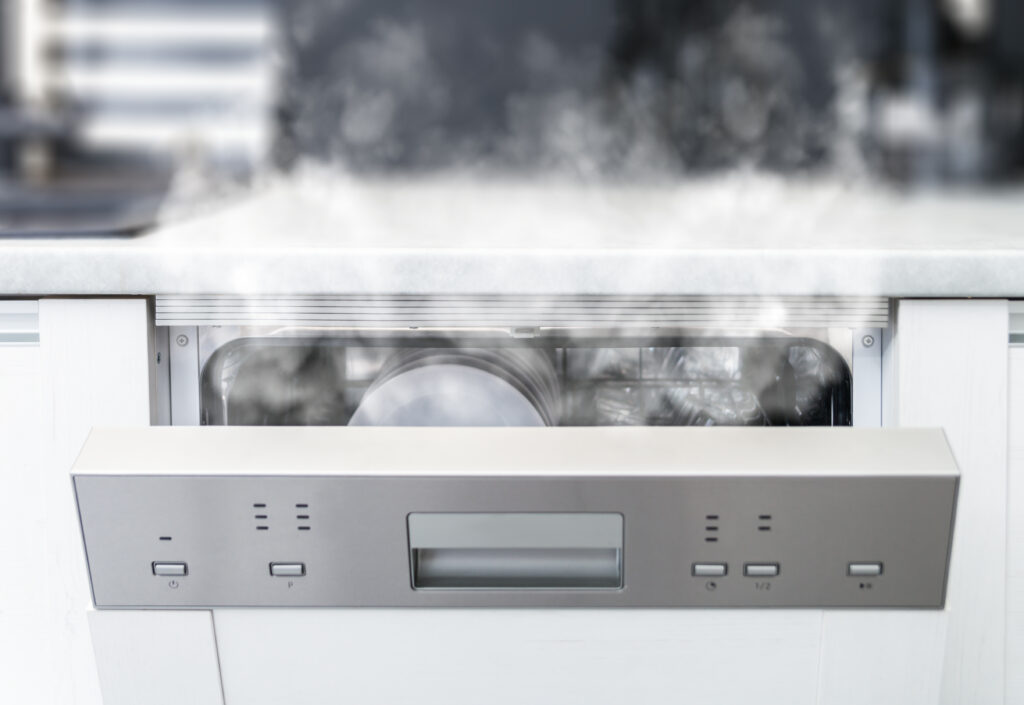
- Cloudy, spotted glassware even after a full dishwasher cycle with detergent. Mineral deposits etch into glass over time and eventually become permanent.
- Clothes that feel stiff or look dull after washing. Hard water binds with soap and detergent rather than fully rinsing out, leaving mineral residue in fabric fibers.
- Higher detergent usage than recommended — you’ve been compensating for hard water’s interference with soap lather without realizing it.
On Your Skin and Hair
- Skin that feels tight, dry, or filmy after showering — mineral ions in hard water interfere with soap rinsing and can disrupt skin’s natural moisture barrier.
- Hair that feels coated, dull, or hard to manage despite using quality products. Calcium deposits on hair shafts are a well-documented effect of hard water exposure.
Inside Your Appliances and Plumbing
This is the category most homeowners don’t notice until it’s become expensive:
- Water heater sediment buildup caused by calcium separating from heated water and settling at the bottom of the tank — driving up energy costs and shortening equipment life. (This is covered in depth in our water heater series.)
- Scale accumulation inside pipes that gradually narrows flow and stresses pipe joints, particularly in older galvanized or copper systems.
- Premature failure of dishwashers and washing machines due to internal scale buildup on heating elements and water valves. Studies have shown hard water can reduce appliance lifespan by 30–50% compared to softened water.
How to Confirm It With an Actual Test
If the symptoms above sound familiar but you want a number to work with, here are your options — from simplest to most comprehensive:
- At-home test strips are available at hardware stores and online for a few dollars. They’re not lab-precise, but they’ll confirm hardness and give you a rough range. For most Dayton-area homeowners, the result won’t be a surprise.
- City of Dayton water quality reports are published annually and include hardness data by zone. The City’s Water Quality Division releases Consumer Confidence Reports each year — searchable by address on the City of Dayton’s utility website.
- Professional water testing through a licensed plumber gives you a full mineral profile, not just hardness. If you’re on well water, this is the route to take — well water in the Dayton region can carry iron and other minerals beyond calcium and magnesium that affect both your health and your plumbing.
Hard Water vs. a Water Quality Problem: Knowing the Difference
It’s worth being clear: hard water is not the same as unsafe water. Calcium and magnesium are naturally occurring minerals and are not considered health hazards at the concentrations found in Dayton’s water supply. The damage hard water causes is to your home, your appliances, and your comfort — not directly to your health.
That said, if your water has a sulfur smell, a metallic taste, unusual discoloration, or you’re on well water with unknown history, those are signals that go beyond hardness into water quality territory. A professional water test and consultation with a licensed plumber is the right call in those situations.
So You Have Hard Water. What Now?
Confirming you have hard water is step one. Step two is understanding what your options actually are — because the market for water treatment equipment is full of terminology, competing claims, and products that range from genuinely effective to expensive and undersized for what they promise.
The next post in this series breaks down salt-based softeners vs. salt-free conditioners vs. whole-home filtration — what each one does, who it’s right for, and what a licensed plumber actually recommends for the Dayton water profile.
If you’re ready to have that conversation now rather than waiting, Restoration Plumbing is the place to start. Our licensed master plumbers work with hard water realities in this region every day. We’ll tell you what makes sense for your home, your usage, and your budget — without steering you toward the most expensive option on the shelf.
Talk to a Licensed Master Plumber About Your Water
Restoration Plumbing is the dedicated plumbing division of RAM Holdings, serving residential and commercial customers throughout the Dayton, Ohio area. We handle water softener consultations, testing referrals, system installation, and ongoing service — all during standard business hours.
Call us at 937-883-6633 or visit www.restorationplumbing.com to schedule a consultation or water test.
If hard water damage has already contributed to a plumbing failure or water damage event in your home, RAM Restoration — our 24/7 emergency restoration division — is available at 937-885-0088.