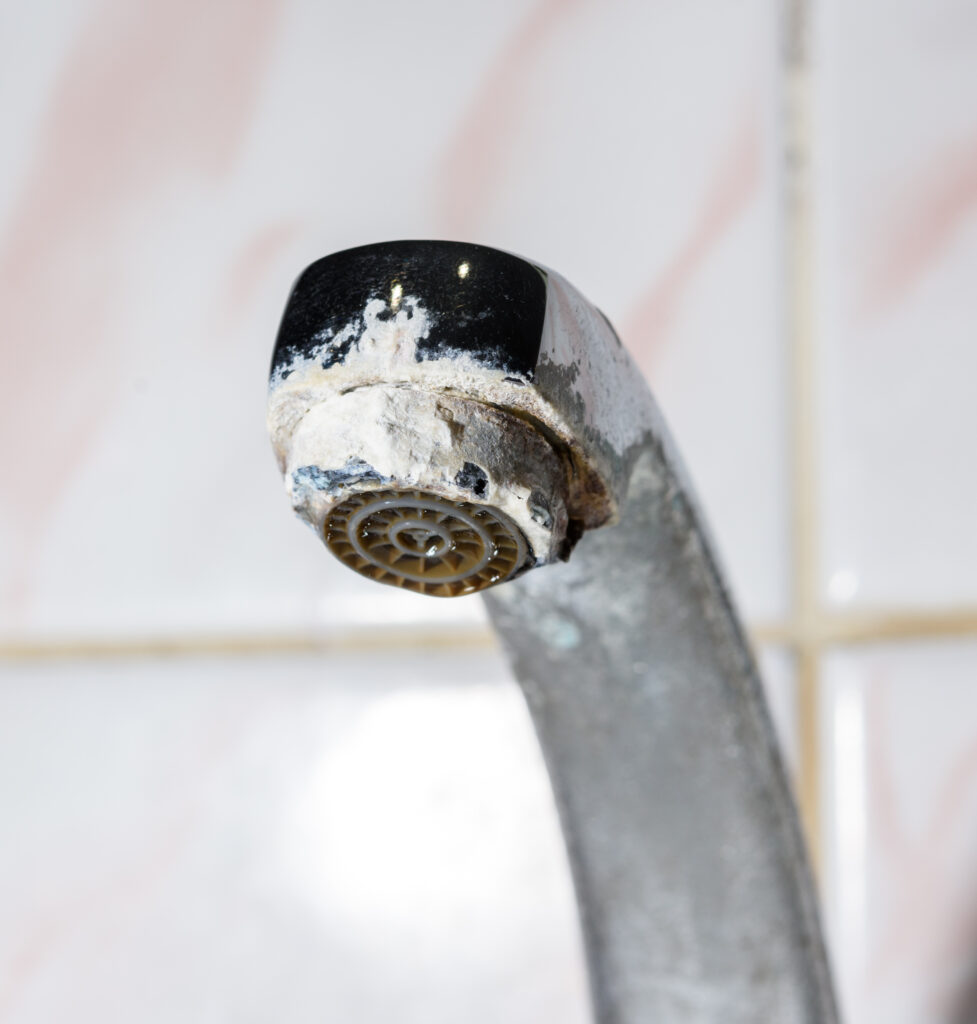
The white crust around your faucet is annoying. The spotted glassware is frustrating. The dry skin after a shower is uncomfortable. These are the symptoms of hard water that Dayton-area homeowners notice and learn to live with — a mild, persistent irritation that never quite rises to the level of emergency.
But those visible symptoms are just the surface of a more serious and largely invisible problem. While you’ve been wiping scale off your faucets, the same mineral-laden water has been working its way through your pipes, into your water heater, through the valves and heating elements of your appliances, and into the joints of your plumbing system. The damage accumulating in those places doesn’t show on the outside until it becomes a repair bill.
The licensed master plumbers at Restoration Plumbing in Dayton, Ohio see the downstream consequences of untreated hard water every week. This post is about what’s actually happening inside your home — and what it costs when it’s finally visible.
Why Dayton’s Hard Water Is Particularly Aggressive
Not all hard water is equal. The mineral concentration in Dayton’s water supply — drawn from the Great Miami River aquifer running through glacially deposited limestone and gravel — consistently tests in the 200–300 milligrams per liter range. That puts the Dayton metro firmly in the “very hard” classification by U.S. Geological Survey standards, a category where the effects on plumbing and appliances are measurable and progressive.
The damage doesn’t happen overnight. It accumulates the way rust does — imperceptibly, day by day, until the threshold is crossed and something fails. The timeline from first installation to first hard-water-related failure depends on water usage, pipe material, and whether any softening or treatment is in place. In untreated systems, problems typically begin showing up within 5 to 8 years.
The First Casualty: Your Water Heater
Of all the systems in your home, your water heater takes the hardest hit from hard water. Here’s why: when cold water enters a tank and gets heated, dissolved calcium and magnesium precipitate out of solution and settle at the bottom of the tank as a dense, insulating layer of mineral scale. The heating element sits beneath that layer and has to work through it to heat the water above.
What this costs you:
- Energy bills rise 10–25% as the element overworks to heat through the insulating scale layer
- Tank lifespan shrinks from the industry standard 10–12 years to as few as 6–8 years in heavily scaled units
- Chronic overheating accelerates internal corrosion, increasing the risk of tank failure and the water damage event that comes with it
A water softener doesn’t just improve your shower experience. It directly extends the working life of the single most expensive plumbing appliance in your home.
The Slow Narrowing: What’s Happening Inside Your Pipes
Scale buildup isn’t limited to your water heater. Every pipe in your home that carries hot water is accumulating a mineral lining on its interior walls. In copper and galvanized steel systems — common in Dayton-area homes built before the 1990s — this process is particularly pronounced.
The result is a gradual narrowing of effective pipe diameter. Water pressure drops. Flow rates at fixtures decrease. In severe cases — pipes that have gone untreated for 15 to 20 years in very hard water conditions — the scale layer becomes thick enough to significantly restrict flow or create stress points that lead to joint failure.
Repiping a home is one of the most significant plumbing expenses a homeowner can face. It is also one of the outcomes that consistent water treatment is most effective at delaying or preventing.
The Appliance Toll: Dishwashers, Washing Machines, and More
Every appliance that uses water in your home is exposed to the same mineral load as your pipes and water heater. The damage timeline is shorter because the internal components — valves, heating elements, spray arms, inlet screens — are more mechanically complex and less robust than plumbing pipe.
| Appliance | How Hard Water Damages It | Documented Impact |
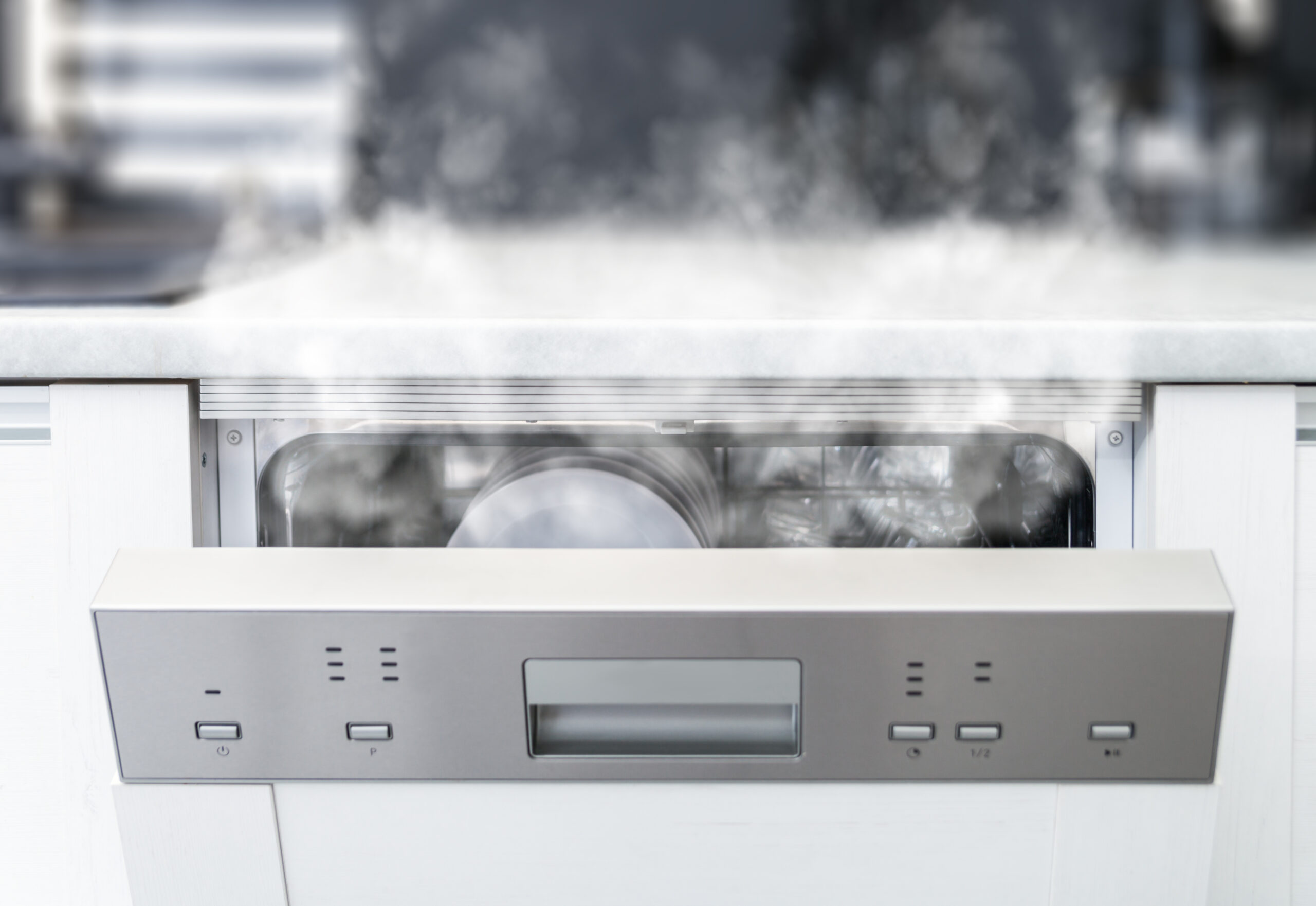
| Dishwasher | Scale on heating element, spray arm clogs, etching on interior tub | Lifespan reduced by up to 30%; uses more energy per cycle as element efficiency drops |
| Washing Machine | Mineral deposits on drum and inlet valves; soap scum buildup in drum and hoses | Requires 50–75% more detergent to achieve equivalent clean; fabric wear accelerated |
| Coffee Maker / Kettle | Internal scale on heating element and water channels | Heating efficiency drops; scale flakes into beverage; element failure within 2–3 years in untreated systems |
| Refrigerator Ice Maker / Water Dispenser | Mineral deposits in inlet valve and water lines | Cloudy ice cubes; valve failure and water line clogs; scale taste in dispensed water |
Individually, each of these impacts feels manageable. Collectively, across a 10 to 15-year ownership window in a home with untreated hard water, the cumulative replacement and repair cost is substantial — and largely preventable.
The Cosmetic and Finish Damage You’re Paying to Ignore
This category gets less attention than mechanical failures, but it carries real replacement costs. Hard water etches glass — permanently. The cloudiness on shower doors and glassware that won’t scrub off isn’t surface buildup; it’s microscopic pitting of the glass surface caused by mineral abrasion and chemical interaction over time. Once the etching is done, the glass cannot be restored.
Chrome and brushed nickel fixtures corrode faster in hard water environments. The scale that accumulates on and around faucet aerators and valve seats eventually works its way into the mechanism, causing drips, stiff operation, and premature failure of cartridges and washers. A faucet that should last 15 to 20 years may need cartridge replacement or full replacement in 8 to 10 in high-hardness conditions.
Tile grout is also vulnerable. The calcium film that forms on tile surfaces in showers and around tubs is stubborn to clean and, over years, can work into porous grout, causing discoloration and accelerating grout degradation.
The Number That Makes the Case for Treatment
Water softener systems are sometimes framed as a comfort purchase — softer skin, better lather, cleaner dishes. That framing undersells the actual financial case. Research from the Water Quality Research Foundation found that water heaters operating on softened water maintained their original efficiency ratings over a 15-year period, while units on hard water lost 48% of their efficiency — and that’s before accounting for shortened equipment life and replacement costs.
When you add up reduced appliance lifespans, increased energy consumption, higher detergent and cleaning product usage, fixture and finish replacement, and the compounding maintenance costs on pipes and the water heater, the annual cost of untreated hard water in a typical Dayton-area home runs several hundred dollars per year at minimum — and considerably more in older homes with aging infrastructure.
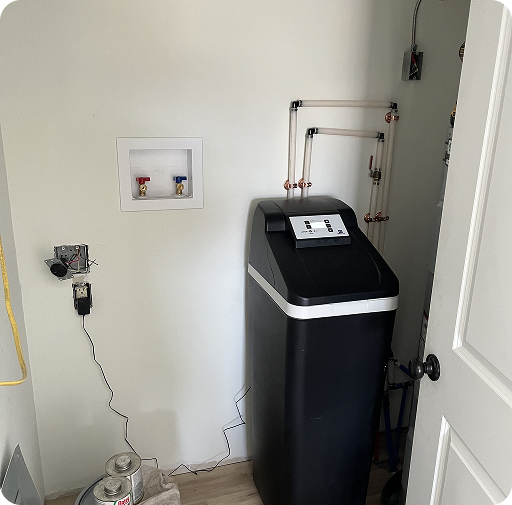
A properly sized whole-home water softener for a typical Dayton residence runs $800–1,500 installed, with ongoing salt costs of $5–10 per month. The math on return on investment, for most households, is not close.
What to Do With This Information
If your home is on Dayton municipal water and you have no water treatment system in place, you are accumulating this damage right now. The question isn’t whether it’s happening — it is. The question is how far along the process is and what the most cost-effective intervention looks like at this stage.
For newer homes or homes where plumbing and appliances are relatively recent, a softener installation is a straightforward protective investment. For older homes with aging pipes and a water heater approaching the end of its service life, the conversation may include a broader plumbing assessment alongside the softener recommendation.
The next post in this series addresses the options themselves: salt-based softeners vs. salt-free conditioners vs. whole-home filtration — what each one actually does, and how to choose the right system for your home’s profile and your household’s needs.
Get a Water Assessment From a Licensed Master Plumber
Restoration Plumbing is the dedicated plumbing division of RAM Holdings, serving residential and commercial customers throughout the Dayton, Ohio area. Our licensed master plumbers can assess the current condition of your plumbing, identify hard water damage in progress, and recommend the right water treatment solution for your home — all during standard business hours.
Call us at 937-883-6633 or visit www.restorationplumbing.com to schedule a consultation.
If hard water damage has already contributed to a plumbing failure or water intrusion event in your home, RAM Restoration — our 24/7 emergency restoration division — is available at 937-885-0088.