By Restoration Plumbing | Serving Moraine, Dayton, and the Miami Valley
It’s easy to forget your sump pump exists — right up until a summer storm rolls through and your basement is under an inch of water. In the Miami Valley, where heavy June and July thunderstorms are a seasonal fact of life, that’s not a hypothetical. It happens every year.
The good news: you don’t need a plumber to do a basic check. A few simple tests, done in about ten minutes, will tell you whether your pump is ready for storm season — or whether it’s time to make a call.
What a Working Sump Pump Actually Does
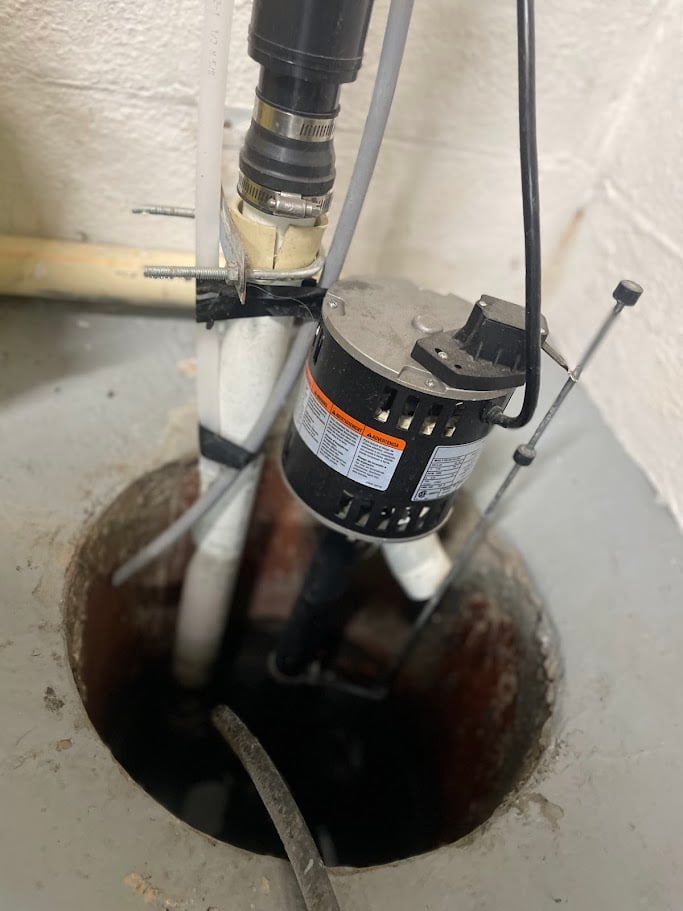
Before you can tell if something’s wrong, it helps to know what right looks like. Your sump pump sits in a pit (the sump basin) in your basement or crawl space. When groundwater or runoff accumulates in that pit and rises to a set level, a float switch triggers the pump. The pump runs, moves water out through a discharge line, and shuts off when the level drops.
That’s the whole job. Simple in theory — but a lot can go wrong with the float, the motor, the discharge line, or the check valve that prevents water from flowing back in after the pump shuts off.
The Bucket Test: Your 60-Second Check
This is the fastest way to confirm your pump is responsive:
- Fill a five-gallon bucket with water.
- Pour it slowly into the sump pit.
- Watch the float rise with the water level.
- The pump should kick on within a few seconds and run until the pit is clear.
- It should shut off cleanly — not run continuously after the water is gone.
If the pump starts, runs, and stops — you’re in good shape for the basics. If it doesn’t respond, runs but doesn’t move water, or won’t shut off, keep reading.
Warning Signs Your Sump Pump May Be Failing
These are the most common indicators that your pump needs attention:
It runs constantly, even when it hasn’t rained.
This usually means the float switch is stuck or the check valve has failed, causing the pump to recycle water it already discharged. Continuous running burns out the motor faster than anything else.
It never runs, even during heavy rain.
Could be a tripped breaker, a stuck float, or a motor that’s seized. Don’t assume silence means nothing is happening — it may mean the pump isn’t working at all.
It makes unusual noise — grinding, rattling, or a loud hum with no action.
Grinding often means debris in the impeller. A loud hum with no water movement usually means the motor is trying to start but can’t. Both are signs the pump needs service or replacement.
Water is slow to clear or returns quickly after the pump runs.
Slow clearing can mean a clogged discharge line or an undersized pump for your pit volume. Water returning quickly after shutdown usually points to a failed check valve.
The pump is more than seven years old.
Most sump pumps are rated for seven to ten years under normal conditions. Dayton’s hard water accelerates wear on internal components. If yours is approaching that range and hasn’t been serviced, a proactive replacement is almost always cheaper than emergency water damage cleanup.
What About Power Outages?
Here’s the scenario that catches Dayton homeowners off guard every summer: the storm that causes flooding is the same storm that knocks out power. Your sump pump runs on electricity. No power means no pump — right when you need it most.
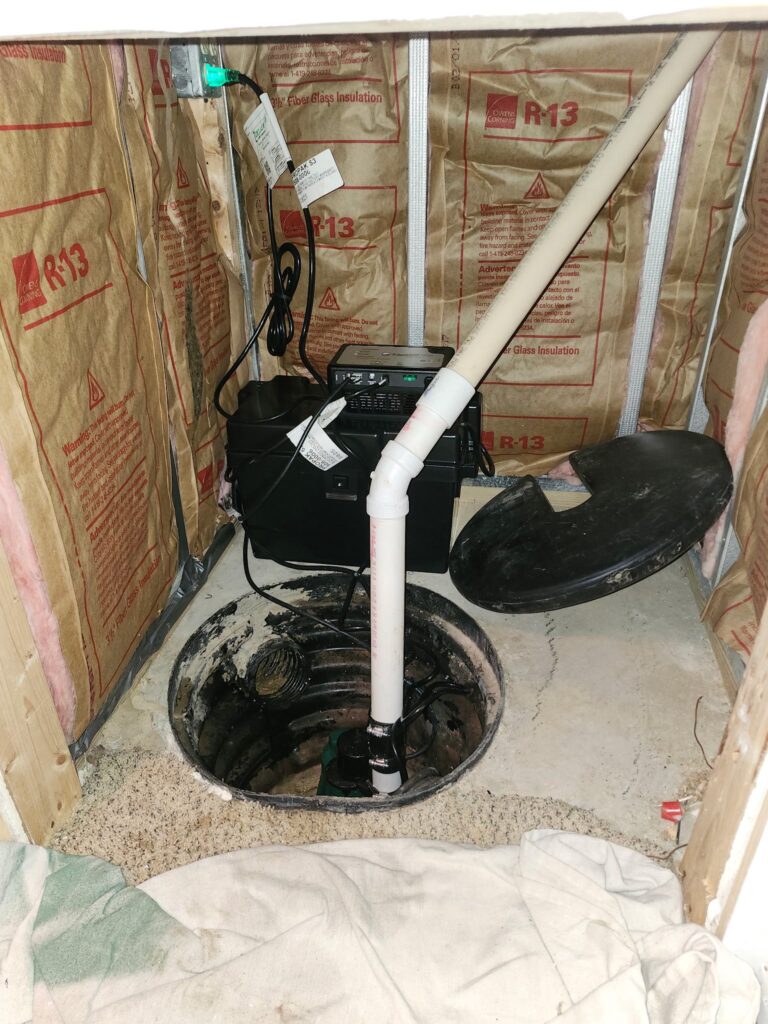
A battery backup system keeps your pump running during outages, typically for several hours depending on pit volume and pump cycling frequency. For homes in lower-lying areas of the Miami Valley — or any home that’s experienced water intrusion before — a battery backup isn’t a luxury. It’s the difference between a dry basement and a restoration call.
If your current pump doesn’t have a backup system, ask us about options when we come out for your inspection.
When to Call a Licensed Plumber
Some sump pump issues are straightforward homeowner maintenance — clearing debris from the pit, checking the discharge line for obstructions, making sure the float moves freely. But these situations call for a licensed plumber:
- The pump fails the bucket test and you can’t identify why
- You’re hearing electrical sounds (humming, buzzing) with no motor action
- The discharge line is damaged, blocked, or incorrectly routed
- Your pump is aging and you want an honest assessment before storm season peaks
- You want a battery backup system installed correctly
Restoration Plumbing has licensed master plumbers on staff serving Moraine, Dayton, Kettering, Centerville, Huber Heights, and surrounding Miami Valley communities. We’ll give you a straight answer on whether your pump needs repair, replacement, or just a cleaning — no upsell pressure.
Call us at 937-883-6633 or schedule service at www.restorationplumbingusa.com/contact/
And if a sump pump failure has already caused water damage in your home, our sister company Ram Restoration offers 24/7 emergency response at 937-885-0088. One family, fully coordinated.