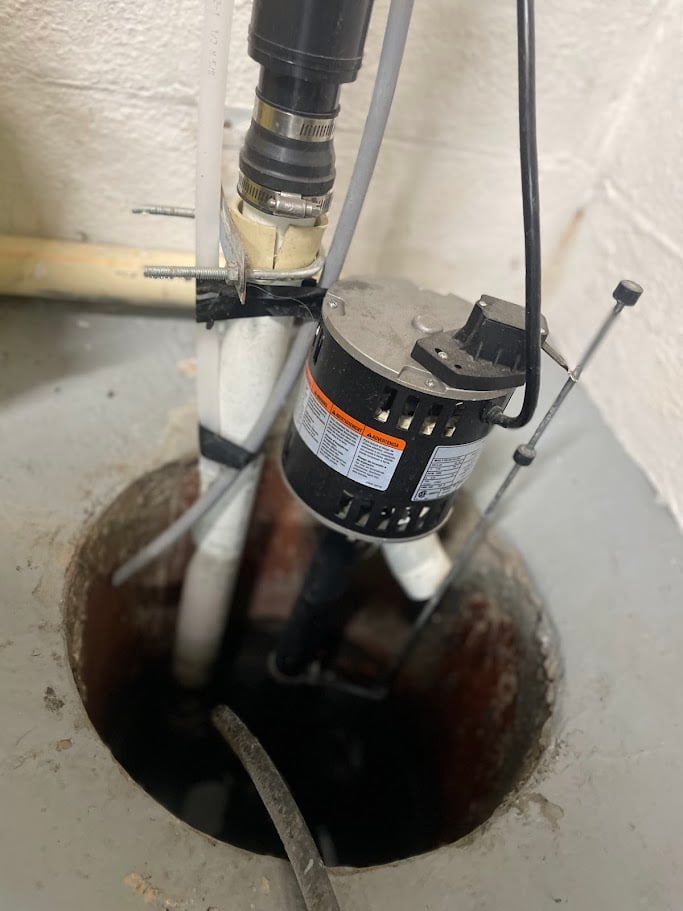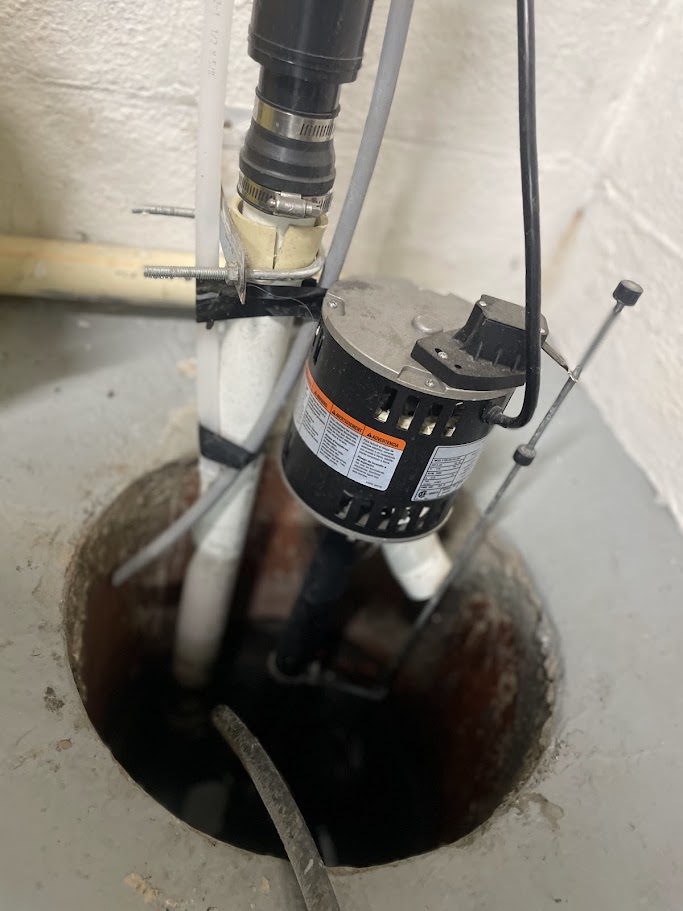
If you already have a sump pump, you might feel pretty good about your basement protection. And you should — a working sump pump handles a lot. But there’s one scenario it can’t handle on its own: a power outage.
In the Miami Valley, the storms that produce the most rainfall are also the ones most likely to knock out power. That’s not a coincidence — it’s just how severe weather works. And when the power goes out, a standard sump pump goes with it, right when your basement needs protection most.
That’s the problem a battery backup system solves. Here’s what it is, how it works, and how to decide whether your home needs one.
What Is a Sump Pump Battery Backup?
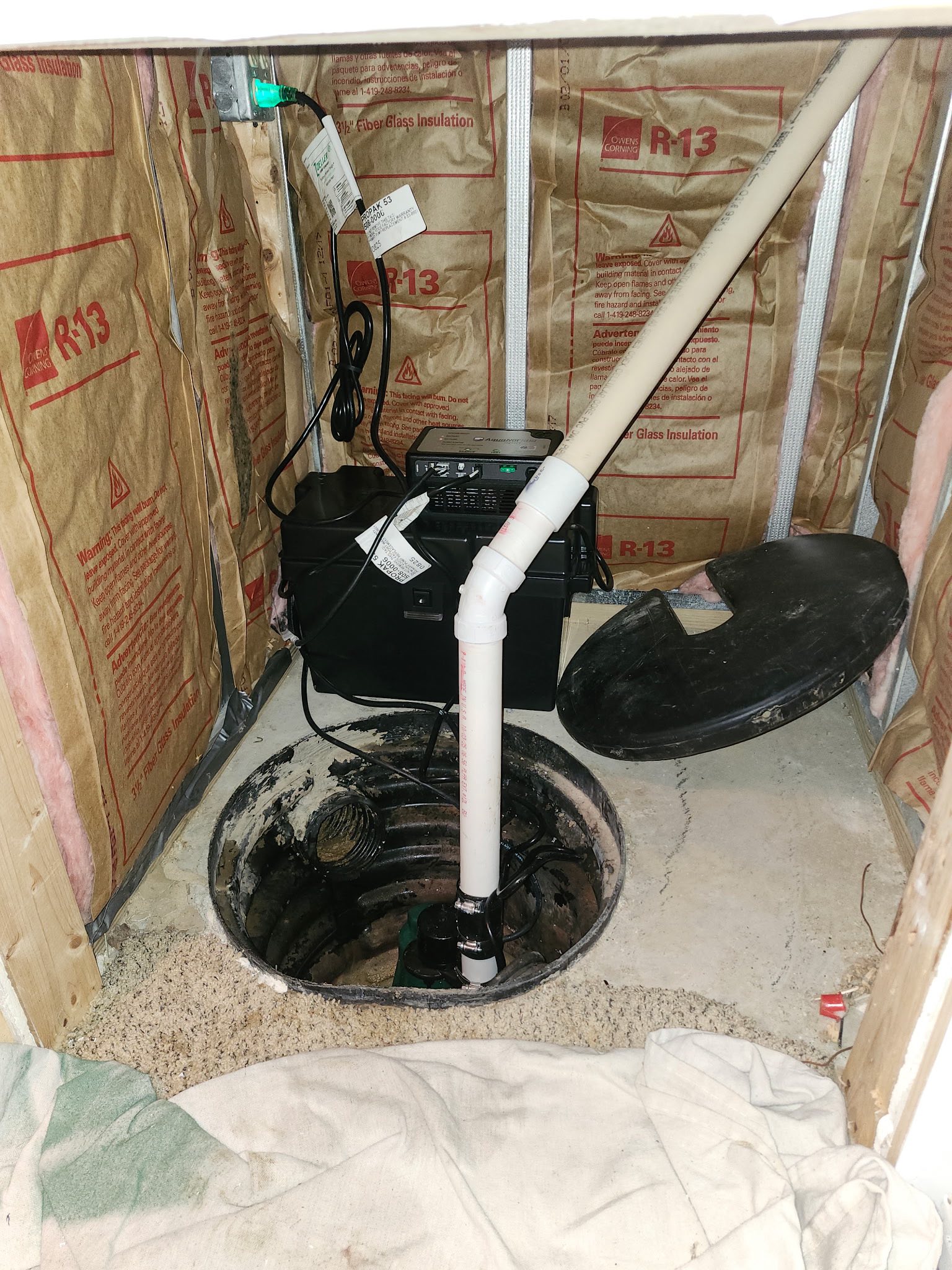
A sump pump battery backup is a secondary pumping system that operates independently of your home’s electrical power. It typically consists of a separate pump installed in your sump pit alongside your primary pump, connected to a sealed lead-acid or lithium battery that stays charged under normal conditions.
When the power goes out — or when your primary pump fails for any reason — the backup system detects rising water in the pit and activates automatically. No manual switching, no waiting for the power to come back. It just runs.
Some systems also include an alarm that alerts you when the backup has activated, so you know to check on things when conditions allow.
How Long Will a Battery Backup Run?
This is usually the first question homeowners ask, and the honest answer is: it depends on how hard your system is working.
A quality battery backup system running at moderate duty — meaning the pump cycles periodically but isn’t running continuously — will typically provide anywhere from five to twelve hours of operation. In a severe storm where water is coming in fast and the pump is running almost constantly, that window shortens.
The key factors are battery capacity, pump draw, and how much water your pit is collecting. When we install a backup system, we factor in your pit size and typical water volume to make sure the system is appropriately sized for your home — not just whatever’s on the shelf.
Battery Backup vs. a Whole-Home Generator: What’s the Difference?
This comes up often, especially from homeowners who already have or are considering a generator. Both provide protection during outages, but they work differently and serve different purposes.
A whole-home generator:
- Powers your entire home, including your sump pump, HVAC, refrigerator, and lights
- Runs on natural gas or propane — fuel supply matters during extended outages
- Kicks on automatically via a transfer switch, usually within seconds of an outage
- Significantly higher cost — installation typically runs several thousand dollars
- Protects against outages of any duration as long as fuel is available
A sump pump battery backup:
- Protects only the sump pump — purpose-built for one job
- Self-contained — no fuel, no transfer switch, no electrician required for basic installation
- Much lower cost — a professionally installed system is a fraction of generator cost
- Battery has a finite runtime — extended multi-day outages may exhaust it
- Some systems allow battery swap or have provisions for external charging
If your primary concern is basement flooding during storms, a battery backup is the focused, cost-effective answer. If you want whole-home protection and have the budget, a generator covers the sump pump along with everything else. Many homeowners in the Dayton area have both.
Does My Home Actually Need One?
Not every home has the same risk profile, and we’d rather give you an honest answer than sell you something you don’t need. Here are the situations where a battery backup is a genuinely smart investment:
Your basement has flooded before.
If water has gotten in once, your home’s drainage situation, soil conditions, or lot grading make it more likely to happen again. A backup system is cheap insurance compared to the cost of water damage remediation.
You’re in a low-lying area or near a drainage basin.
Parts of the Miami Valley — particularly areas near the Great Miami River and its tributaries — experience higher groundwater pressure during heavy rain events. If your sump pump runs frequently during storms, that’s a signal your home is working harder than average to stay dry.
Your neighborhood loses power during storms.
Some areas of the greater Dayton region are more prone to outages than others due to tree canopy, line age, or substation load. If your block goes dark in most major storms, a backup system is a straightforward call.
You travel or spend time away from home.
A pump failure while you’re out of town for a weekend is a worst-case scenario. A battery backup with an alarm gives you an additional layer of protection — and some systems can send alerts to your phone.
Your primary pump is getting older.
Sump pumps typically last seven to ten years. As a pump ages, it’s more likely to fail at a critical moment. Pairing a backup system with an aging primary pump buys you time and protection while you plan for replacement.
What If My Primary Pump Fails for a Non-Power Reason?
This is worth understanding: a battery backup system doesn’t just protect against outages. It protects against primary pump failure of any kind — a seized motor, a stuck float, a tripped breaker. The backup monitors water level in the pit independently of the primary pump. If water rises past the normal activation point, the backup kicks on regardless of why the primary didn’t.
That’s a meaningful layer of redundancy that has nothing to do with storms or power.
What Does Installation Look Like?
A battery backup installation is a straightforward job for a licensed plumber. The backup pump mounts in the existing sump pit, connects to the discharge line, and ties into a dedicated battery unit that’s typically wall-mounted nearby. Most installations are completed in a few hours with no major disruption to the home.
We’ll assess your existing pump, pit size, and discharge configuration before recommending a system — different homes have different needs, and the right backup for a home with a large pit and high water table looks different from one for a home that rarely runs its pump.
Ready to Talk Through Your Options?
Restoration Plumbing has licensed master plumbers serving Moraine, Dayton, Kettering, Centerville, Huber Heights, Beavercreek, and the surrounding Miami Valley. We’ll take a look at your current setup and give you a straight answer on whether a battery backup makes sense for your home — and which system fits your situation.
Call us at 937-883-6633 or schedule service at www.restorationplumbingusa.com/contact/
Already dealing with water damage from a pump failure? Our sister company Ram Restoration responds 24/7 at 937-885-0088. One call, fully coordinated.